Fibromyalgia is often associated with widespread body pain, tenderness, fatigue, and cognitive challenges, but many people do not realize that the condition can also affect the digestive and urinary systems. For countless individuals living with fibromyalgia, bowel and bladder problems become an exhausting and frustrating part of daily life—yet they are rarely discussed openly.
Symptoms such as frequent urination, bladder discomfort, constipation, diarrhea, bloating, abdominal pain, or an urgent need to use the bathroom can significantly impact quality of life. These symptoms may feel confusing or embarrassing, especially when others fail to understand the connection between fibromyalgia and digestive or urinary health.
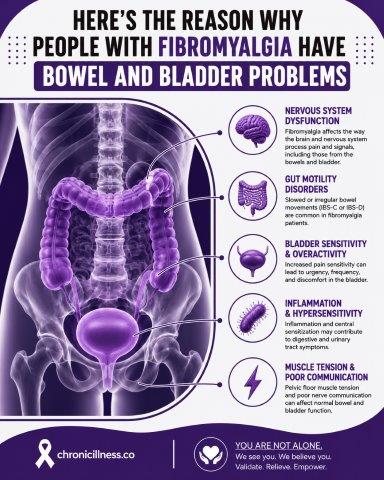
The truth is that bowel and bladder issues are surprisingly common in fibromyalgia patients. Researchers and healthcare professionals believe there are several overlapping reasons why this happens, ranging from nervous system dysfunction and pain sensitivity to gut motility problems and pelvic muscle tension.
Understanding the relationship between fibromyalgia and bowel and bladder symptoms can help people feel less alone and better equipped to advocate for their health.
Understanding Fibromyalgia Beyond Pain
Fibromyalgia is a chronic condition that affects how the brain and nervous system process pain signals. Instead of simply being a muscle or joint problem, fibromyalgia is believed to involve abnormalities in the central nervous system, making the body more sensitive to pain and sensory input.
Common symptoms of fibromyalgia include:
- Widespread pain
- Fatigue
- Sleep disturbances
- Brain fog
- Sensitivity to temperature, touch, or sound
- Headaches and migraines
- Digestive issues
- Bladder discomfort
Because fibromyalgia affects multiple systems in the body, symptoms can extend far beyond muscles and joints.
This broader impact helps explain why bowel and bladder problems are so common.
Nervous System Dysfunction: The Brain-Body Communication Problem
One of the leading explanations for bowel and bladder symptoms in fibromyalgia involves nervous system dysfunction.
Fibromyalgia affects how the nervous system processes signals, including messages from internal organs like the bowels and bladder.
Normally, the brain and body communicate efficiently to regulate:
- Digestion
- Bladder fullness
- Muscle contractions
- Pain signaling
- Sensory responses
In fibromyalgia, these communication pathways may become dysregulated.
The nervous system becomes hypersensitive, meaning signals that would normally feel mild may become amplified or painful.
This altered processing can lead to symptoms such as:
Increased Urinary Urgency
Some people feel the need to urinate frequently, even when the bladder is not full.
Bladder Discomfort
Mild sensations may become painful or irritating because the nervous system interprets signals differently.
Digestive Sensitivity
Normal digestive activity may trigger discomfort, bloating, or pain.
In many ways, the nervous system in fibromyalgia becomes overreactive, creating physical symptoms that feel very real—even when standard medical tests appear normal.
Gut Motility Disorders and Fibromyalgia
Another major reason people with fibromyalgia experience bowel issues involves gut motility disorders.
Gut motility refers to how food moves through the digestive system.
For some individuals with fibromyalgia, digestion slows down, speeds up unpredictably, or becomes irregular.
This can contribute to symptoms like:
- Constipation
- Diarrhea
- Abdominal cramping
- Bloating
- Gas
- Irregular bowel movements
Many fibromyalgia patients are also diagnosed with Irritable Bowel Syndrome (IBS), a digestive disorder strongly linked to chronic pain conditions.
IBS-C and IBS-D
Fibromyalgia patients may experience different IBS patterns.
IBS-C involves constipation-predominant symptoms, while IBS-D involves diarrhea-predominant symptoms.
Some individuals experience alternating symptoms, moving between constipation and diarrhea unpredictably.
This inconsistency can be physically uncomfortable and emotionally draining.
Daily planning may revolve around bathroom access, food choices, or symptom management.
Why the Gut and Brain Are Closely Connected
To understand bowel problems in fibromyalgia, it helps to understand the gut-brain connection.
The digestive system and nervous system constantly communicate through what is often called the gut-brain axis.
Stress, pain, inflammation, and nervous system dysfunction can all influence digestive activity.
When the body remains in a heightened stress state—as often happens in fibromyalgia—the digestive system may struggle to function properly.
This can lead to:
- Delayed digestion
- Increased gut sensitivity
- Stomach discomfort
- Altered bowel habits
Pain itself may also worsen digestive symptoms.
For example, severe pain can trigger stress hormones that disrupt normal digestive processes.
This creates a cycle where pain worsens digestion, and digestive discomfort increases overall stress and symptom severity.
Bladder Sensitivity and Overactivity
Bladder problems are another commonly overlooked symptom of fibromyalgia.
Many people report:
- Frequent urination
- Sudden urgency
- Bladder pressure
- Pelvic discomfort
- Pain during bladder filling
In some cases, fibromyalgia overlaps with conditions such as interstitial cystitis, sometimes called painful bladder syndrome.
Why Does This Happen?
The answer may lie in heightened pain sensitivity.
Fibromyalgia causes central sensitization, meaning the nervous system becomes overly responsive to pain signals.
This means sensations from the bladder that would normally feel mild may instead feel painful or urgent.
For example:
A bladder that is only partially full might feel intensely uncomfortable.
This increased sensitivity can lead to frequent bathroom trips and ongoing discomfort.
Unfortunately, many people feel dismissed because medical tests may not always show infection or structural abnormalities.
But absence of visible disease does not mean symptoms are imagined.
The discomfort is real.
Inflammation and Hypersensitivity
While fibromyalgia itself is not traditionally classified as an inflammatory disease, researchers believe inflammation and nervous system hypersensitivity may still play a role in digestive and urinary symptoms.
The body may become increasingly reactive to internal sensations.
This heightened sensitivity can contribute to:
Digestive Pain
Normal digestive movements may feel unusually painful.
Abdominal Tenderness
The abdominal region may become sensitive to pressure or bloating.
Urinary Tract Discomfort
Even mild bladder sensations may feel intensified.
This hypersensitivity means the body reacts more strongly to experiences that others might barely notice.
For someone without fibromyalgia, mild bloating may be annoying.
For someone with fibromyalgia, the same sensation may feel severe and disruptive.
Muscle Tension and Pelvic Floor Dysfunction
Another important but often overlooked factor is pelvic floor muscle tension.
The pelvic floor is a group of muscles that supports the bladder, bowel, and reproductive organs.
In fibromyalgia, chronic pain often causes muscles throughout the body to remain tense.
This tension may affect the pelvic floor as well.
When pelvic muscles become tight or dysfunctional, it can interfere with:
- Bladder emptying
- Bowel movements
- Pelvic comfort
- Urinary control
Some people experience:
Difficulty Emptying the Bladder
Muscles may not relax properly.
Constipation
Pelvic floor dysfunction may make bowel movements more difficult.
Pelvic Pain
Tight muscles can contribute to discomfort and pressure.
Because fibromyalgia already increases body-wide sensitivity, pelvic symptoms may feel especially intense.
The Emotional Toll of Bowel and Bladder Symptoms
Digestive and urinary symptoms are not just physically uncomfortable—they can also affect emotional well-being.
Many people feel embarrassed discussing these struggles.
Symptoms may interfere with:
- Social activities
- Travel
- Work schedules
- Relationships
- Sleep quality
Someone may constantly worry about:
- Bathroom access
- Symptom flare-ups
- Unexpected urgency
- Pain during outings
This unpredictability can create anxiety and emotional exhaustion.
Over time, some individuals begin avoiding events or activities entirely.
The emotional burden can feel isolating, especially when symptoms remain invisible.
Why Fibromyalgia Symptoms Often Flare Together
Many people notice that bowel, bladder, and pain symptoms tend to worsen at the same time.
This happens because fibromyalgia symptoms are interconnected.
Triggers that may worsen symptoms include:
Stress
Emotional stress can worsen nervous system sensitivity and digestive symptoms.
Poor Sleep
Lack of restorative sleep often increases pain and fatigue.
Dietary Triggers
Certain foods may aggravate digestive issues for some people.
Hormonal Changes
Hormonal fluctuations may worsen pain and bowel or bladder symptoms.
Physical Overexertion
Pushing the body too hard may trigger flare-ups.
Recognizing personal triggers can help some individuals better understand symptom patterns.
Managing Bowel and Bladder Symptoms With Fibromyalgia
While there is no universal solution, symptom management often involves a combination of approaches.
Tracking Symptoms
Keeping a symptom journal may help identify patterns involving:
- Food
- Stress
- Sleep
- Pain flare-ups
- Bathroom habits
Hydration
Proper hydration supports bladder and digestive function.
Gentle Movement
Light exercise or stretching may improve circulation and muscle tension.
Pelvic Floor Therapy
Some individuals benefit from working with specialists trained in pelvic floor dysfunction.
Stress Reduction
Stress management may help calm nervous system sensitivity.
Medical Support
Healthcare providers can help rule out overlapping conditions and discuss treatment options.
Because every person experiences fibromyalgia differently, individualized care matters.
The Importance of Feeling Believed
One of the hardest parts of fibromyalgia-related bowel and bladder problems is feeling misunderstood.
Many people hear comments like:
- “Your tests are normal.”
- “Maybe it’s anxiety.”
- “It’s probably nothing serious.”
These responses can feel invalidating.
Invisible symptoms are still real symptoms.
Pain, urgency, digestive discomfort, and fatigue can profoundly affect daily life—even if others cannot see the struggle.
Validation matters.
Being listened to, taken seriously, and supported emotionally can make an enormous difference.
Living With Fibromyalgia Means Managing More Than Pain
Fibromyalgia is often reduced to a pain condition, but the reality is far more complicated.
For many people, it affects:
- Sleep
- Energy
- Focus
- Mental health
- Digestion
- Bladder function
- Daily independence
Bowel and bladder issues are not uncommon or unusual in fibromyalgia.
They are part of a larger picture involving nervous system sensitivity, altered pain processing, muscle tension, and disrupted body communication.
Understanding this connection helps remove shame and confusion.
People living with fibromyalgia deserve compassion, validation, and comprehensive care—not dismissal.
Final Thoughts
If you live with fibromyalgia and struggle with bowel or bladder symptoms, you are not imagining it, and you are certainly not alone.
These symptoms are more common than many people realize, even if they are not talked about openly.
The connection between fibromyalgia, digestion, and bladder function is complex, but it reflects how deeply the nervous system influences the entire body.
Living with chronic symptoms can feel overwhelming, especially when they disrupt daily routines and personal comfort.
But understanding the “why” behind these experiences can be empowering.
Fibromyalgia is not just widespread pain—it is a condition that can touch nearly every system in the body.
And recognizing that truth is an important step toward greater awareness, better support, and more compassionate care for those navigating this invisible illness every day.

For More Information Related to Fibromyalgia Visit below sites:
References:
Join Our Whatsapp Fibromyalgia Community
Click here to Join Our Whatsapp Community
Official Fibromyalgia Blogs
Click here to Get the latest Fibromyalgia Updates
Fibromyalgia Stores
