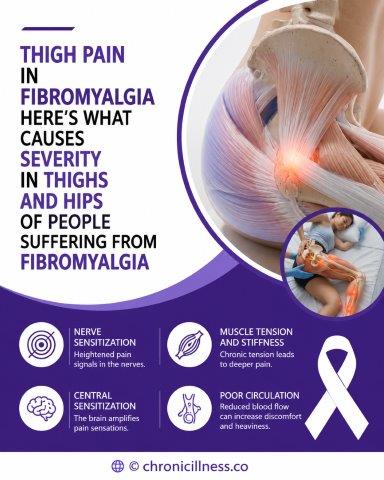
Fibromyalgia is a chronic condition that affects millions of people worldwide, often bringing widespread pain, exhaustion, sleep disturbances, and unusual nerve-related symptoms. While many people associate fibromyalgia with generalized body aches, one particularly frustrating and painful issue that often goes unnoticed is thigh and hip pain.
For many people living with fibromyalgia, thigh pain can feel intense, unpredictable, and difficult to explain. Some describe it as a deep aching pain, while others experience sharp, shooting sensations, burning discomfort, stiffness, or heaviness in the muscles. Even simple movements such as walking, climbing stairs, sitting for long periods, or getting out of bed may become uncomfortable.
If you have fibromyalgia and struggle with pain in your thighs or hips, understanding the possible causes may help you better manage symptoms and identify patterns that trigger flare-ups. In this article, we will explore the reasons behind thigh pain in fibromyalgia, common symptoms, potential triggers, and strategies that may help reduce discomfort.
Understanding Fibromyalgia and Muscle Pain
Fibromyalgia affects how the brain and nervous system process pain signals. Instead of pain being caused by visible injuries or inflammation alone, the body becomes more sensitive to sensations that might otherwise feel mild.
This phenomenon, often called pain amplification, means that even ordinary muscle tension or pressure may feel significantly more painful.
Although fibromyalgia can affect the entire body, pain commonly appears in areas such as:
- Hips
- Thighs
- Lower back
- Shoulders
- Neck
- Legs
The thighs and hips are especially vulnerable because they support body weight, movement, posture, and balance throughout the day.
Why Fibromyalgia Causes Thigh Pain
Thigh pain in fibromyalgia rarely comes from a single cause. Instead, several overlapping factors may contribute to discomfort.
1. Nerve Sensitization
One of the primary causes of fibromyalgia pain is central sensitization, a condition where the nervous system becomes overly reactive.
In simple terms, the brain begins amplifying pain signals.
This means:
- Mild muscle soreness may feel severe
- Pressure on muscles becomes painful
- Movement triggers increased discomfort
- Existing pain lasts longer than expected
For people with fibromyalgia, the nerves in the hips and thighs may become hypersensitive, leading to persistent aching or sudden painful episodes.
Many people describe this sensation as:
- Deep soreness
- Electrical shocks
- Shooting pain
- Tenderness to touch
- Burning discomfort
Even sitting in one position for too long can sometimes trigger pain in sensitive areas.
2. Muscle Tension and Tightness
Muscle stiffness is extremely common in fibromyalgia, especially in the thighs and hips.
The muscles in these areas work constantly to support movement, posture, and weight-bearing activities. Chronic tension may build over time, creating discomfort that feels difficult to relieve.
People often notice:
- Tight hamstrings
- Hip stiffness
- Cramping sensations
- Heavy or sore thighs
- Limited flexibility
This tension can worsen during flare-ups or after physical activity.
Why Tight Muscles Hurt More in Fibromyalgia
In fibromyalgia, muscles often struggle to recover efficiently after exertion. Activities that might seem minor to others—such as walking longer distances or climbing stairs—can trigger pain and stiffness.
This is one reason many individuals feel sore after even moderate movement.
3. Trigger Points and Tender Spots
Fibromyalgia is known for causing tender areas throughout the body.
The hips, outer thighs, and upper legs frequently become painful due to trigger points or hypersensitive spots.
These tender areas may:
- Feel bruised without visible marks
- Hurt when touched
- Cause radiating pain down the leg
- Become more painful during stress
Pressure on these areas from sitting, sleeping positions, or tight clothing may increase discomfort.
Common Pain Locations
Many people with fibromyalgia report pain in:
Outer Thighs
Pain on the outside of the thighs often feels sore, tender, or burning.
Front Thighs
The quadriceps muscles may feel heavy, stiff, or deeply achy.
Inner Thighs
Pain here may feel sharp or tight, especially after physical activity.
Hip Area
Pain near the hips often radiates into the thighs and lower back.
4. Inflammation and Soft Tissue Sensitivity
Fibromyalgia itself is not considered an inflammatory disease in the traditional sense. However, many people experience symptoms that resemble inflammation.
Soft tissues around the hips and thighs may become:
- Sensitive
- Tender
- Painful during movement
- Irritated after prolonged activity
This can contribute to feelings of swelling or soreness, even when medical imaging appears normal.
Why It Feels Like Inflammation
The nervous system in fibromyalgia may interpret sensations differently, making normal muscle strain feel more intense.
As a result, people often feel pain that seems disproportionate to physical findings.
5. Poor Circulation and Muscle Fatigue
Some individuals with fibromyalgia experience circulation-related discomfort.
Reduced blood flow and muscle fatigue may contribute to:
- Heaviness in legs
- Throbbing sensations
- Weakness
- Muscle soreness
People often notice worsening symptoms after:
- Standing too long
- Sitting for extended periods
- Overexertion
- Long walks
The thighs can feel fatigued quickly, making everyday tasks physically draining.
Common Symptoms of Thigh Pain in Fibromyalgia
Fibromyalgia-related thigh pain can feel very different from person to person.
Deep Aching Pain
Many people describe a deep, persistent ache that feels embedded in the muscles.
This pain often worsens:
- In the morning
- After activity
- During weather changes
- During stress
Sharp or Shooting Pain
Some people experience sudden sharp pain that travels down the thighs or hips.
This may feel:
- Stabbing
- Electrical
- Sudden and intense
Shooting pain may come and go unpredictably.
Burning Sensation
Burning pain is another common complaint.
People often describe sensations such as:
- Skin feeling hot
- Muscles feeling on fire
- Tingling discomfort
Burning pain may intensify during fibromyalgia flare-ups.
Stiffness in Hips and Legs
Morning stiffness or prolonged sitting can make movement difficult.
Common experiences include:
- Difficulty walking after resting
- Tightness in hips
- Reduced flexibility
- Pain when standing up
Many people need time to “loosen up” before moving comfortably.
Pain That Worsens with Activity
Unlike ordinary soreness that improves with movement, fibromyalgia pain sometimes becomes worse after physical exertion.
Even light activities may trigger discomfort, including:
- Grocery shopping
- Household chores
- Walking longer distances
- Exercise
This phenomenon is often referred to as post-exertional worsening.
Fibromyalgia Thigh Pain vs Other Conditions
Thigh pain is not always caused by fibromyalgia alone. Other conditions can overlap or mimic symptoms.
Sciatica
Sciatica occurs when the sciatic nerve becomes irritated or compressed.
Symptoms often include:
Fibromyalgia can sometimes coexist with sciatica.
Arthritis
Hip arthritis may cause stiffness and pain that radiates into the thighs.
Pain often worsens with joint movement.
Myofascial Pain Syndrome
This condition involves painful trigger points in muscles and may overlap with fibromyalgia symptoms.
Peripheral Neuropathy
Burning or tingling sensations in the thighs may sometimes signal nerve-related conditions unrelated to fibromyalgia.
Persistent or worsening pain should always be discussed with a healthcare provider to rule out other causes.
What Triggers Thigh Pain in Fibromyalgia?
Several factors may worsen symptoms.
Stress
Emotional stress is one of the most common fibromyalgia triggers.
Stress can increase:
Weather Changes
Cold weather and humidity often worsen muscle pain and stiffness.
Many people report increased thigh discomfort during seasonal shifts.
Poor Sleep
Sleep problems make pain more intense.
Without restorative sleep, muscles may feel more sore and sensitive.
Overactivity
Doing too much on a “good day” may trigger severe pain afterward.
This pattern is often called the boom-and-bust cycle.
Long Periods of Sitting
Remaining inactive too long may worsen stiffness and soreness in the thighs and hips.
How to Relieve Fibromyalgia Thigh Pain
Although there is no cure for fibromyalgia, several strategies may help reduce thigh pain and improve comfort.
Gentle Stretching
Slow stretching may help relax tight thigh and hip muscles.
Helpful stretches include:
- Hamstring stretches
- Hip flexor stretches
- Gentle yoga poses
Avoid pushing too hard, as overexertion may worsen symptoms.
Low-Impact Exercise
Movement can improve circulation and flexibility.
Activities that may help include:
- Walking
- Swimming
- Water aerobics
- Gentle cycling
Start slowly and increase activity gradually.
Heat Therapy
Warmth may reduce muscle tightness and improve comfort.
Options include:
- Heating pads
- Warm baths
- Heated blankets
Heat often feels especially soothing during flare-ups.
Massage Therapy
Gentle massage may relieve tension in the hips and thighs.
However, pressure should remain light because fibromyalgia muscles are often highly sensitive.
Rest and Pacing
Learning to pace activities may help prevent symptom flare-ups.
Try to:
- Take breaks regularly
- Avoid overdoing physical tasks
- Alternate activity with rest
Small adjustments often make a big difference.
Improving Sleep Quality
Better sleep may reduce pain severity.
Helpful habits include:
- Consistent bedtime routines
- Reducing screen time before bed
- Relaxation techniques
Quality sleep supports muscle recovery and nervous system regulation.
When to See a Doctor
Although thigh pain can be part of fibromyalgia, medical attention is important if you experience:
- Sudden severe pain
- Swelling or redness
- Weakness in the leg
- Persistent numbness
- Difficulty walking
A healthcare provider can rule out nerve problems, blood clots, arthritis, or other medical conditions.
Living with Fibromyalgia Thigh Pain
Chronic thigh pain can feel exhausting and frustrating, especially when symptoms interfere with movement and independence. Activities that once felt simple may suddenly require planning, energy conservation, and recovery time.
The invisible nature of fibromyalgia often makes things harder because others may not understand the seriousness of the pain. Yet the discomfort is very real.
Managing fibromyalgia often requires patience, experimentation, and self-awareness. What works for one person may not work for another, and symptoms can change over time.
The key is learning your body’s patterns, recognizing triggers, and creating routines that support healing and stability.
Final Thoughts
Thigh pain in fibromyalgia can range from mild soreness to severe aching, burning, stiffness, and shooting discomfort. It often develops due to nerve sensitization, muscle tightness, trigger points, fatigue, poor circulation, and increased pain sensitivity.
Symptoms may worsen with activity, stress, poor sleep, or weather changes, making daily life especially challenging. While there is no one-size-fits-all solution, gentle movement, heat therapy, proper rest, stress management, and pacing activities may help improve comfort.
If you are experiencing severe or persistent thigh pain, speaking with a healthcare professional can help identify whether fibromyalgia is the primary cause or if another condition may be contributing to symptoms.
Most importantly, remember this: living with fibromyalgia is difficult, but your pain is real, your experience matters, and support is available.

For More Information Related to Fibromyalgia Visit below sites:
References:
Join Our Whatsapp Fibromyalgia Community
Click here to Join Our Whatsapp Community
Official Fibromyalgia Blogs
Click here to Get the latest Fibromyalgia Updates
Fibromyalgia Stores
