Fibromyalgia is often described as one of the most misunderstood chronic illnesses in the world. While many people associate it mainly with widespread pain and fatigue, those living with fibromyalgia know the condition can involve a long list of frustrating and sometimes alarming symptoms—many of which are invisible to others.
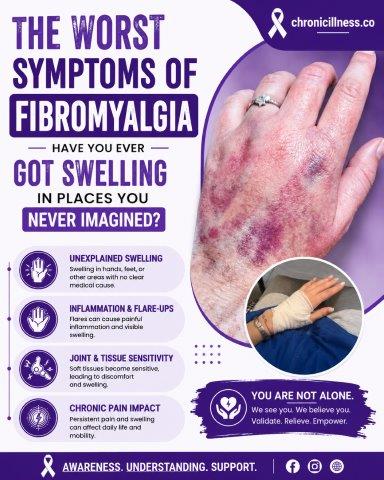
One symptom that surprises many people is unexplained swelling. Some individuals with fibromyalgia report swelling in their hands, feet, face, fingers, legs, or other unexpected areas of the body, sometimes without any clear medical explanation. This swelling can feel painful, uncomfortable, and emotionally distressing—especially when tests fail to provide clear answers.
If you have ever experienced swelling in places you never imagined, you are not alone. Fibromyalgia symptoms often extend far beyond muscle aches, and understanding what may be happening inside the body can help people feel less confused and more empowered.
Let’s explore some of the worst symptoms of fibromyalgia, why swelling sometimes occurs, and how these experiences can affect daily life.
What Is Fibromyalgia?
Fibromyalgia is a chronic pain condition that affects how the brain and nervous system process pain signals. Instead of pain functioning normally, the nervous system becomes overly sensitive, amplifying discomfort throughout the body.
Researchers believe fibromyalgia involves central sensitization, a process where the nervous system becomes hyper-reactive. As a result, sensations that might not bother others can feel intensely painful for someone with fibromyalgia.
The condition affects millions of people worldwide and is often accompanied by symptoms including:
- Widespread pain
- Fatigue
- Sleep disturbances
- Brain fog
- Muscle stiffness
- Headaches
- Digestive problems
- Sensitivity to temperature and touch
- Anxiety or depression
- Swelling sensations
What makes fibromyalgia particularly difficult is that symptoms can change daily, often flaring unexpectedly.
Can Fibromyalgia Cause Swelling?
One of the most confusing symptoms reported by people with fibromyalgia is swelling.
Although fibromyalgia itself is not traditionally considered an inflammatory disease like rheumatoid arthritis, many people still experience sensations of swelling—or visible swelling—in different areas of the body.
This can happen in places such as:
- Hands
- Fingers
- Feet
- Ankles
- Knees
- Face
- Legs
- Wrists
Some people describe feeling as if their body is swollen even when swelling is difficult to see. Others notice obvious puffiness or tightness in certain body parts.
Doctors sometimes refer to this experience as subjective swelling, meaning a person feels swollen despite limited objective findings. However, many patients report visible changes that significantly affect comfort and mobility.
The frustrating part is that swelling does not always show up clearly in medical testing, leaving many people feeling dismissed or misunderstood.
Why Might Swelling Happen in Fibromyalgia?
There is no single explanation for swelling in fibromyalgia, but researchers have proposed several possible reasons.
Nervous System Dysfunction
Fibromyalgia affects the nervous system, and this dysfunction may influence circulation, fluid balance, and pain signaling.
When nerves become hypersensitive, sensations of pressure, tightness, and swelling may feel more intense.
Some experts believe abnormal nerve communication may contribute to swelling sensations in hands, feet, or soft tissues.
Inflammation During Flare-Ups
Fibromyalgia is not classified as an inflammatory disease, but flare-ups may still trigger inflammatory-like symptoms.
Many people report:
- Increased swelling
- Heat sensations
- Muscle tenderness
- Skin sensitivity
Stress, illness, weather changes, overexertion, or poor sleep may trigger symptom flares that worsen discomfort.
Reduced Movement and Fluid Retention
Chronic pain often limits mobility.
When someone spends long periods resting because of fatigue or pain, fluid circulation may slow down, increasing swelling in extremities.
Less movement can sometimes contribute to puffiness in hands, feet, or ankles.
Coexisting Conditions
Fibromyalgia often overlaps with other medical conditions that may cause swelling.
These include:
- Arthritis
- Lupus
- Autoimmune disorders
- Chronic fatigue syndrome
- Thyroid conditions
- Hypermobility syndromes
Because symptoms overlap, it is important to rule out other medical causes with a healthcare professional.
Unexplained Swelling: One of Fibromyalgia’s Most Frustrating Symptoms
Many people living with fibromyalgia describe swelling as one of the most emotionally frustrating symptoms because it often feels unpredictable.
One day your hands may feel normal.
The next day rings no longer fit.
Shoes suddenly feel tight.
Clothes feel uncomfortable.
Hands become stiff or painful.
Some individuals wake up swollen for no apparent reason.
Others notice swelling after activity or periods of stress.
The unpredictability can create fear and confusion.
Many people wonder:
“Am I imagining this?”
“Why does nobody understand what I’m feeling?”
“Why are my symptoms changing?”
Unfortunately, invisible symptoms are often misunderstood.
When medical tests appear “normal,” people may feel invalidated despite very real discomfort.
But your experience matters—even when explanations are incomplete.
Widespread Pain: The Symptom That Never Fully Leaves
Pain remains one of the defining symptoms of fibromyalgia.
Unlike pain from an injury, fibromyalgia pain can feel widespread and constantly shifting.
Common descriptions include:
- Burning pain
- Deep aching
- Sharp stabs
- Electric sensations
- Muscle soreness
- Tenderness to touch
- Joint discomfort
Pain often moves around the body.
One day shoulders hurt.
The next day legs ache.
Then jaw pain appears unexpectedly.
Many people describe feeling like they have the flu every day.
Even light pressure—such as clothing seams, hugs, or sitting too long—can become painful.
This persistent discomfort affects every aspect of life.
Joint and Tissue Sensitivity
Another difficult symptom is increased sensitivity in muscles and soft tissues.
Fibromyalgia often creates tenderness in areas such as:
- Neck
- Shoulders
- Lower back
- Hips
- Knees
- Arms
- Hands
Simple movements may suddenly feel painful.
Carrying groceries.
Typing.
Walking upstairs.
Even holding a phone can trigger discomfort during flare-ups.
Soft tissue sensitivity may also contribute to feelings of swelling or pressure around joints.
Many people explain it as feeling bruised all over—even without injury.
Extreme Fatigue Beyond Ordinary Tiredness
Fatigue associated with fibromyalgia is not ordinary exhaustion.
It often feels overwhelming and physically draining.
Many people wake up feeling exhausted despite sleeping through the night.
This happens because fibromyalgia frequently disrupts restorative sleep.
Symptoms may include:
- Frequent waking
- Restless sleep
- Insomnia
- Non-refreshing sleep
- Night pain
Fatigue can become so severe that daily tasks feel impossible.
Cooking dinner may feel overwhelming.
Getting dressed can require enormous effort.
Simple errands become physically draining.
People often misunderstand this level of exhaustion because it cannot be seen.
Fibro Fog: The Cognitive Symptom No One Expects
Brain fog—or “fibro fog”—is another symptom people often describe as life-altering.
This may involve:
- Memory issues
- Trouble concentrating
- Forgetfulness
- Mental confusion
- Difficulty finding words
Many people feel embarrassed when they lose track of conversations or forget simple information.
Tasks that once felt easy become mentally exhausting.
Work, relationships, and confidence may suffer.
Fibro fog is especially frustrating because it affects independence and productivity.
Flare-Ups That Disrupt Daily Life
Fibromyalgia symptoms tend to come in waves.
During flare-ups, pain and swelling may intensify dramatically.
Triggers can include:
- Stress
- Illness
- Weather changes
- Hormonal shifts
- Poor sleep
- Physical overexertion
- Emotional stress
During a flare, someone may feel unable to function normally.
Walking becomes harder.
Pain intensifies.
Fatigue worsens.
Swelling may become more noticeable.
These unpredictable episodes often create anxiety because people never know when symptoms might suddenly worsen.
The Emotional Impact of Living With Fibromyalgia
Fibromyalgia affects far more than the body.
Living with unpredictable symptoms can feel emotionally exhausting.
Many people struggle with:
Anxiety
Fear of flare-ups or worsening symptoms can create constant stress.
Depression
Chronic pain may lead to sadness, grief, or hopelessness.
Isolation
Because symptoms are invisible, people sometimes feel misunderstood or alone.
Frustration
Repeated medical appointments without clear answers can feel discouraging.
The emotional side of fibromyalgia deserves just as much attention as physical symptoms.
Mental health support matters.
Compassion matters.
Validation matters.
Why Fibromyalgia Symptoms Are Often Misunderstood
One of the hardest realities of fibromyalgia is feeling unseen.
People often hear comments like:
- “You don’t look sick.”
- “Maybe it’s stress.”
- “You just need more exercise.”
- “Everyone gets tired.”
These statements can feel painful.
Fibromyalgia is real—even when others cannot see it.
Invisible symptoms are still valid symptoms.
Pain does not become legitimate only when visible.
Swelling, fatigue, brain fog, and flare-ups deserve understanding and support.
Coping Strategies That May Help
While there is no universal cure for fibromyalgia, many people find relief through a combination of strategies.
Gentle Movement
Stretching, yoga, swimming, or short walks may improve circulation and stiffness.
Prioritizing Sleep
Better sleep hygiene may help reduce fatigue and pain sensitivity.
Stress Management
Stress often worsens flare-ups.
Meditation, breathing exercises, or counseling may help calm the nervous system.
Anti-Inflammatory Habits
Some people report symptom improvement through balanced nutrition and hydration.
Pacing Activities
Learning energy limits helps reduce post-exertional crashes.
Doing too much too quickly often worsens symptoms.
You Are Not Imagining Your Symptoms
Perhaps the most important thing to remember is this:
If you are experiencing swelling, pain, fatigue, or symptoms that others struggle to understand—you are not imagining it.
Fibromyalgia is complex.
Symptoms vary from person to person.
What affects one individual may not affect another.
And yes, swelling in unexpected places is something many people living with fibromyalgia report, even if the science is still evolving.
Your experience is real.
Your pain matters.
Your exhaustion matters.
And even when symptoms feel confusing or invisible, you deserve compassion, proper medical care, and support.
Living with fibromyalgia is difficult enough without carrying the burden of disbelief.
You are not weak.
You are not exaggerating.
And most importantly—you are not alone.

For More Information Related to Fibromyalgia Visit below sites:
References:
Join Our Whatsapp Fibromyalgia Community
Click here to Join Our Whatsapp Community
Official Fibromyalgia Blogs
Click here to Get the latest Fibromyalgia Updates
Fibromyalgia Stores
